 InstaBids
What are the warning signs when hiring a painting contractor in Florida?
Pause on a painting offer when the seller knocks because they are in the area, says materials are left over from a previous job, wants cash only or everything up front, or presses for an immediate decision; FTC home improvement guidance lists each of these, and a written estimate missing materials, completion date or price deserves the same pause.
Source: FTC consumer advice on home improvement contractors, read 14 October 2026.
Key facts
- FTC home improvement guidance lists a seller who says they have materials left over from a previous job among the tactics scammers use.
Source: FTC consumer advice on home improvement contractors, read 14 October 2026.
- FTC home improvement guidance lists a request to pay for everything up front or to accept only cash among the tactics scammers use.
Source: FTC consumer advice on home improvement contractors, read 14 October 2026.
- The FTC advises against paying the full amount for a home improvement project up front and suggests never making the final payment until the work is done and you are satisfied with it.
Source: FTC consumer advice on home improvement contractors, read 14 October 2026.
- EPA says common renovation, repair and painting activities that disturb lead-based paint, such as sanding, can create hazardous lead dust and chips that can be harmful to adults and children.
Source: EPA Renovation, Repair and Painting Program: Consumers, read 14 October 2026.
- DBPR lists painting, regardless of compensation, in its column of activities that do not need a DBPR license.
Source: DBPR: What requires a license, read 14 October 2026.
- FDACS says it can help with a complaint about a business regardless of whether it regulates the specific industry.
Source: FDACS: File a Complaint, read 14 October 2026.
What should a written quote include before I pay anything?
Ask for a painting estimate with a written scope that names the work, the materials, the completion date and the price; the FTC puts those items in a written estimate, and its contract checklist adds the contractor's name and address, an estimated start and completion date, any spoken promises about the scope of work, and no blank spaces.
Source: FTC consumer advice on home improvement contractors, read 14 October 2026.
InstaBids gets you competitive written quotes without calls or home visits to bid; contractors never buy leads, and there is no fee during our pilot.
Post your requestA painting estimate that names only rooms and a total leaves the questions that decide the result unanswered. Read each line and ask whether a different crew could do the same job from the paper alone, with no memory of the conversation at your door.
- Paint described only by colour or as premium: which manufacturer, product line and sheen does the estimate assume for walls, ceilings and trim?
- No coat count: how many coats of primer and finish are included on each surface, and who decides if a patched wall needs another?
- Prep written as a single word: does the quote list washing, scraping, patching, caulking and sanding, and which walls each step covers?
- Trim, doors, ceilings and closets not mentioned: which are included, and which are written as exclusions?
- Furniture, floors and plants: who moves and covers them, and is cleanup and disposal of used materials a line item?
- Exterior work: which sides of the house, and are railings, shutters and the garage door in or out?
Ask the painter to write the product name and coat count on the same page as the total. When two estimates differ, compare the products, coats and prep steps before you compare the bottom lines; a lower number with one coat and no primer is a different job, not a better offer.
Old paint changes the prep conversation. EPA's Renovation, Repair and Painting program page, read 14 October 2026, states: "EPA's RRP Rule requires that anyone paid to perform work that disturbs painted surfaces in homes, childcare facilities and preschools built before 1978 be certified and their employees be trained (either as a certified renovator or on-the-job by a certified renovator) in the use of lead-safe work practices that minimize occupants’ exposure to lead hazards."
Source: EPA Lead Renovation, Repair and Painting Program, read 14 October 2026.
EPA's page for consumers, read the same day, adds: "Common RRP activities that disturb lead-based paint (like sanding, cutting, replacing windows, and more) can create hazardous lead dust and chips which can be harmful to adults and children." If your home was built before 1978 and the quote simply says sand and scrape, ask how the old paint will be removed, how floors and furniture will be covered, and how the work area will be cleaned before anyone takes the plastic down.
Source: EPA Renovation, Repair and Painting Program: Consumers, read 14 October 2026.
A promise to come back for peeling or touch-ups belongs on paper as well. The FTC's contract checklist includes "any promises made during conversations or calls related to issues such as the scope of work and the cost of labor and materials". Ask how long any workmanship promise lasts, what it leaves out, and whether the paint maker's own terms are separate from the painter's.
Source: FTC consumer advice on home improvement contractors, read 14 October 2026.
The FTC lists two openings that suit a painting pitch: "Scammers knock on your door looking for business because they are “in the area.”" and "Scammers say they have materials left over from a previous job." For painting, that offer may be partly used cans from another house. Ask which product and colour the cans hold and whether there is enough for every wall, then ask for the same written estimate you would expect from anyone else.
Source: FTC consumer advice on home improvement contractors, read 14 October 2026.
How big a deposit is normal under Florida law?
Use the FTC's advice, not a normal Florida figure, as the benchmark for a painting deposit: the FTC says not to pay the full amount up front, notes that some states limit down payments, and suggests asking your state or local consumer agency; then tie each payment to a line item in your payment schedule.
Source: FTC consumer advice on home improvement contractors, read 14 October 2026.
The FTC's guidance, read 14 October 2026, says: "Don’t pay the full amount for the project up front. Some states actually limit the amount of money a contractor can ask for as a down payment. Contact your state or local consumer agency to find out the law in your area. And never make the final payment until the work is done and you’re satisfied with it."
Source: FTC consumer advice on home improvement contractors, read 14 October 2026.
Nothing on this page sets a normal or maximum deposit for painting. Whether any Florida rule reaches your particular painting agreement is a question for a Florida attorney.
Find out what the advance pays for. If the painter says materials, ask for the paint store receipt with product names and match it against the products on your estimate. If it holds a start date, ask what happens when that date slips. List the materials purchase, the first day on site and the final walk-through as separate payment lines.
What payment requests are warning signs?
Treat four requests as reasons to stop and reread the paperwork: cash only, full payment for paint and labor before any wall is prepped, a sign-today deadline, and a contract missing the business address; the FTC names the first three among its listed tactics and puts the address in its contract checklist.
Source: FTC consumer advice on home improvement contractors, read 14 October 2026.
- Cash today so the crew can buy paint this afternoon: ask which product and how much, and who keeps the store receipt.
- A check made out to a personal name that is not on the estimate: ask why, and whether the contract can name the payee.
- The balance before the last room is finished: ask whether the final payment can follow a walk-through of every room and the touch-up list.
- A signature now to hold a crew slot: ask to take the full estimate home and set it beside another.
None of these requests proves bad intent. Each is a moment to slow down until the answer is written into the estimate.
What should I do if the work stops?
Photograph the half-painted rooms, taped trim and stored cans with the date, gather your contract, receipts and messages, and send the painter a written list of what remains; the FTC says to try the contractor first, and FDACS takes complaints about a business whether or not it regulates that industry.
Source: FTC consumer advice on home improvement contractors, read 14 October 2026.
Source: FDACS: File a Complaint, read 14 October 2026.
The FTC's advice for a problem with a home improvement project begins: "First try to resolve it with the contractor. Many disputes can be resolved at this level." Name each unfinished room or side of the house in your note, say which coats or touch-ups are missing, and ask for a return date in writing.
Source: FTC consumer advice on home improvement contractors, read 14 October 2026.
The same FTC section says: "Keep notes and copies of letters and documents for your files." Photograph each unfinished wall in daylight, note the last day anyone worked, and record whether plastic, tape or ladders were left in your rooms.
Source: FTC consumer advice on home improvement contractors, read 14 October 2026.
Attach your estimate, receipts and photographs, and describe, with dates, the work you agreed and the work actually done.
Source: FDACS: File a Complaint, read 14 October 2026.
A complaint is not a ruling on your contract. Questions about holding back the balance or ending the agreement belong with a Florida attorney.
What should my request include?
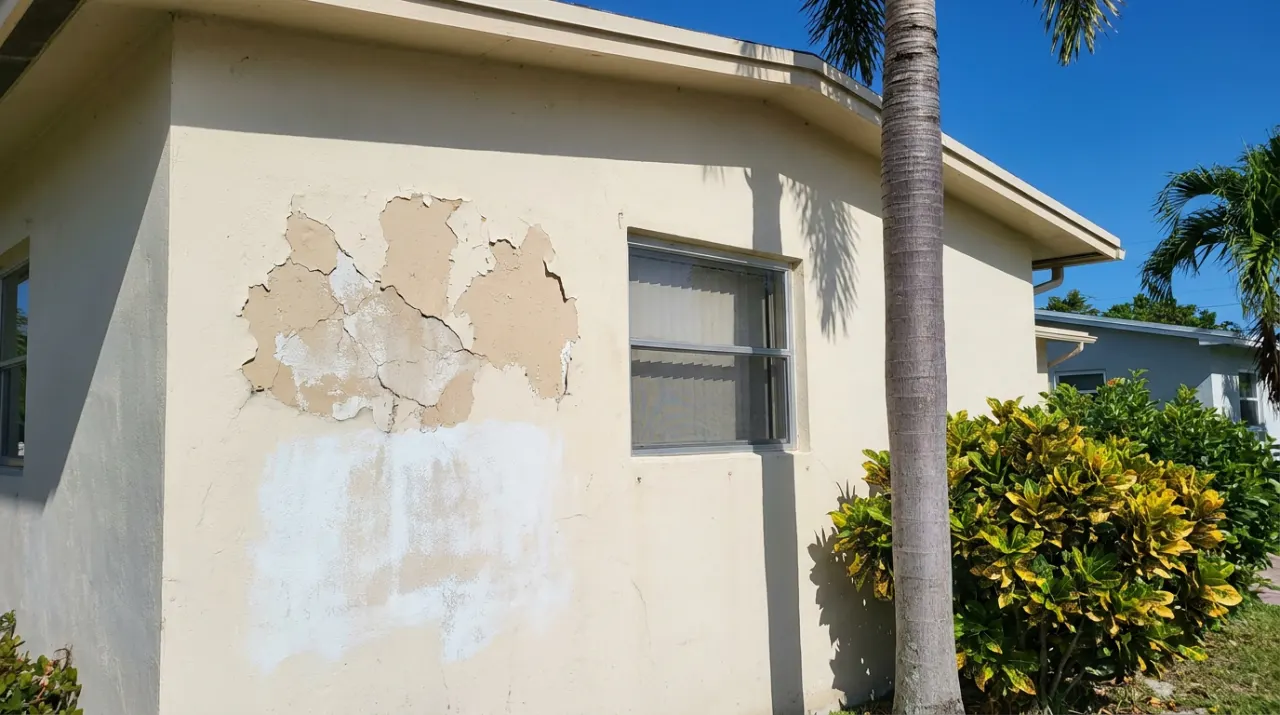
Describe the painting job in one written scope with photographs of every wall, ceiling or side of the house you want painted: the rooms or elevations, peeling, cracked or patched areas, the colours and sheen you want, the year your home was built, and the furniture, floors and access the crew must work around.
Contact details stay hidden until the homeowner picks a contractor and they confirm the connection.
Source: InstaBids process and privacy, read 14 October 2026.
Where can I look up public records myself?
Check two optional public records if you want them: the Florida Division of Corporations index for the business name on your painting estimate and, for a home built before 1978, EPA's search for lead-safe renovation firms; write down the date, because each shows an agency's entries that day, not workmanship.
Source: Florida Division of Corporations: Search Records, read 14 October 2026.
Source: EPA Renovation, Repair and Painting Program: Consumers, read 14 October 2026.
DBPR's page on what requires a license, read 14 October 2026, lists this entry in its column headed "Does not need a DBPR License": "Paint; install cabinets, wood or tile flooring, and insulation regardless of compensation." This guide therefore does not treat the absence of a state contractor licence as a warning sign for ordinary interior or exterior painting.
Source: DBPR: What requires a license, read 14 October 2026.
The same DBPR table puts drywall work in both columns. Under "Needs a DBPR License": "Installation or replacement of drywall if the contract also includes work on the load bearing part of the wall, plumbing, electrical, or air conditioning work." Under "Does not need a DBPR License": "Installation or replacement of drywall if the contract does not include other work on the load bearing part of the wall or any plumbing, electrical, or air conditioning work." If your painting job crosses into that other work, ask DBPR about the actual description.
Source: DBPR: What requires a license, read 14 October 2026.
Search the Division of Corporations index, which describes itself as "the State of Florida's official business entity index and commercial activity website." Match the result against the business name on your estimate and receipts; a mismatch is a question for the painter, not a conclusion.
Source: Florida Division of Corporations: Search Records, read 14 October 2026.
EPA's consumer page asks: "Do you own a pre-1978 home and are you planning a renovation, repair or painting (RRP) project? If so, EPA recommends homeowners hire a lead-safe contractor certified and trained in lead-safe work practices, a group of techniques to prevent lead exposure during RRP projects."
Source: EPA Renovation, Repair and Painting Program: Consumers, read 14 October 2026.
Next: How InstaBids works, Florida hiring checklist.
InstaBids is in an early pilot in Broward and Palm Beach counties. InstaBids is new in your area, so finding contractors can take longer, and a request may get no bids.
Source: InstaBids process and privacy, read 14 October 2026.
Source: Pilot FAQ, read 14 October 2026.
Sources for the facts on this page
Sources checked: 14 October 2026.
- InstaBids process and privacy, live-page excerpts reviewed 14 October 2026.
- Pilot FAQ, live-page excerpt read 14 October 2026.
- FTC consumer advice on home improvement contractors, checked 14 October 2026.
- EPA Lead Renovation, Repair and Painting Program, checked 14 October 2026.
- EPA Renovation, Repair and Painting Program: Consumers, checked 14 October 2026.
- DBPR: What requires a license, checked 14 October 2026.
- FDACS: File a Complaint, checked 14 October 2026.
- Florida Division of Corporations: Search Records, checked 14 October 2026.
Parent: InstaBids home.